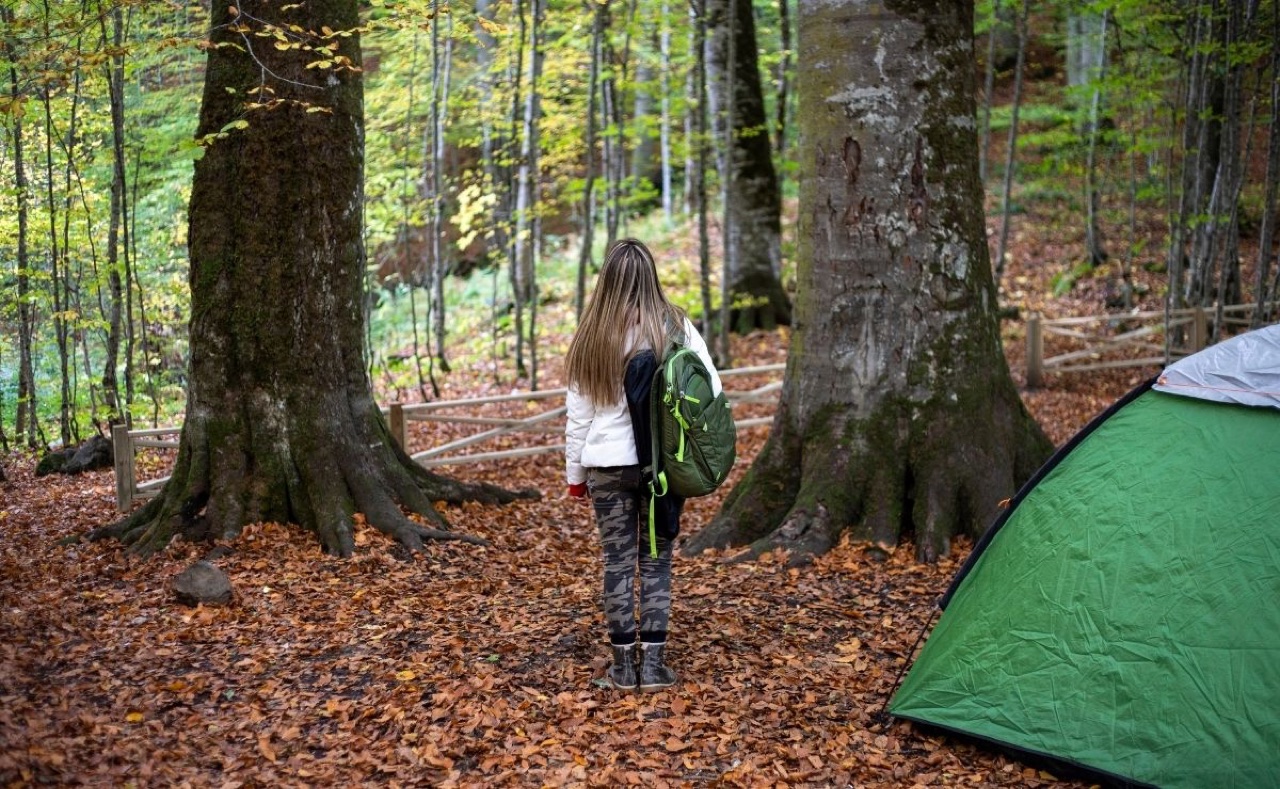
Best forest getaways in Poland


Poland is one of the most forested countries in Europe — woodland covers nearly 30% of the country. Here are the regions that genuinely give you a break: silence, wildlife, clean air and good places to stay.
Why a forest heals better than a beach holiday
According to research from the Institute of Occupational Medicine, two days spent in a forest reduce cortisol (stress hormone) levels on average by 12-16%, and the concentration of phytoncides in coniferous forests strengthens the immune system for up to 30 days after the trip. This is not marketing — it is the Japanese practice of shinrin-yoku (forest bathing), which has been part of official preventive healthcare since 1982.
Poland has a forest for everyone: from the strict reserves of Białowieża to the wild beech forests of the Bieszczady. Below — six regions selected from around forty checked locally, with specific places worth stopping at for longer.
1. Białowieża Forest — Europe's oldest lowland forest
A UNESCO World Heritage site. With over 12 000 years of continuous history — the trees here remember the times of mammoths. Białowieża National Park protects the heart of the forest: 250-year-old oaks, 400-year-old pines, almost 600 free-roaming European bison.
Worth knowing: you can only enter the strict reserve (the most precious part) with a guide (book at least a week ahead at park HQ, around 50 PLN/person). On your own you can walk the "reserve" trails — Royal Oak Trail, the educational path "Landscapes of the Forest".
Where to stay
- Hajnówka — gateway to the forest, good base, 3* hotels from 200-300 PLN/night
- Białowieża — boutique guest houses (Carska, Stoczek 1929), restaurants serving Podlasie cuisine
- Farm stays around Narewka — typical price 80-150 PLN/person with home-cooked food
Best time to visit
May-June (flowering and bird nesting) or September-October (deer rut and autumn colours). July-August — hot and full of mosquitoes. Winter — magical, but requires proper gear.
2. Tuchola Forest — pines, lakes, silence
The third-largest contiguous forest complex in Poland — almost 3 200 km² of pines, post-glacial lakes, wetlands. Perfect for families and people who prefer cycling over trekking. Tuchola Forest National Park and the Tuchola Landscape Park form a coherent UNESCO Biosphere Reserve.
Highlights: Wdzydze (open-air museum and lakes), the Old Polish Yews reserve in Wierzchlas (over 4 000 yews, some 700 years old), Charzykowy with very good conditions for windsurfing.
What to do here
- Brda river kayaking — Świt-Tuchola section (3 days), a Polish kayaking classic
- The "Wild Brda" cycling route — 70 km, marked, easy difficulty
- Observation tower in Wielki Mędromierz — 360° forest view
- Mushroom picking in September-October — porcini, boletes, scaber stalks
3. Bieszczady — wild beech forests and wolves
The most distant escape from civilisation in Poland. Bieszczady National Park protects the largest area of Carpathian beech forest in Europe (UNESCO). This is where wolves, bears, lynx and bison live — and bear tracks can be found literally tens of metres from the trail.
Bieszczady is for those who want a real disconnect: no mobile signal in many places, farm stays without Wi-Fi, dirt roads, mountain pastures instead of all-inclusive hotels. Price per night in a guest house 100-180 PLN, in the legendary "Chatka Puchatka" shelter under Połonina Wetlińska — 60 PLN.
Three trips worth doing
- Tarnica (1 346 m, the highest peak) — full day from Wołosate, view over Slovakia and Ukraine
- Połonina Wetlińska — easier, with overnight at the "Chatka Puchatka" shelter, a legendary place
- Solina lake — boat cruises, swimming spots, the Bieszczady Forest Railway from Majdan
4. Roztocze — overlooked, but stunning
Lublin Province and Subcarpathia. Less known than Bieszczady, but for many — the most beautiful. Roztocze National Park protects old beech and fir forests, and at its heart lies Bukowa Góra — one of Poland's most beautiful trails. Wildlife: wild Polish ponies, beavers, wolves.
"Czartowe Pole" reserve with 200-year-old beeches and waterfalls on the Sopot river. Zwierzyniec — a historic town of the Zamoyski estate, an ideal base.
What sets Roztocze apart
Very low building density, dark sky (Starry Sky Park — you can see the Milky Way with the naked eye), borderland cuisine: pierogi with kasha, cabbage rolls, regional honeys.
5. Augustów Forest — land of rivers and lakes
The largest contiguous forest complex in Poland — over 1 600 km² of pine, spruce and birch, between Augustów and the Lithuanian border. Iconic places: Augustów Canal (19th-century engineering monument, 102 km), Lake Wigry (Wigry National Park), the post-Camaldolese monastery in Wigry.
Less talked about: the Augustów Forest is one of Poland's best places for birdwatching: white-tailed eagles, black storks, white-backed woodpeckers. A professional birdwatching guide costs around 250-400 PLN/day.
6. Beskidy — Babia Góra and Pilsko
For those who like forests combined with mountain trails. Babia Góra National Park protects the last natural altitude zones in the Polish Western Carpathians. Classic route: Zubrzyca Górna → Markowe Szczawiny → Babia Góra (1 725 m). Pilsko and Lipnica Wielka — the alternative for those avoiding crowds.
Plus: very good regional cuisine (oscypek cheese, sour rye soup, "highlander pancakes") and cheaper accommodation than in the Tatras (guest house 120-200 PLN/night).
Practical logistics — what to take and how to prepare
Basic gear
- Mid-cut hiking boots — trails can be muddy even in summer
- A waterproof jacket with a membrane (Gore-Tex or equivalent) — forest weather changes fast
- Headlamp with spare batteries — it gets dark in a forest faster than in open terrain
- Mosquito and tick repellent (DEET 30-50%) — especially May-August
- A first-aid kit with blister plasters, anti-tick cream, anti-bite gel
- A power bank — many forests (Bieszczady, Roztocze) have no signal, GPS may drain your phone
Tick season in Poland runs from March to November (worst in May-June and September). Borreliosis-infected ticks make up 10-30% in some regions, in Podlasie and Mazury even up to 50%. After every forest trip, check your whole body. Remove ticks with tweezers or a special remover (pharmacy, around 15 PLN), straight and firmly. Do not use oil, butter or alcohol — that is a myth that increases infection risk.
How to plan and find good accommodation
Weekend season in Polish forests (especially Białowieża, Bieszczady) can get crowded — good farm stays are booked 2-3 months in advance. A package with accommodation, meals and transfers (from Warsaw or Kraków) is usually 20-30% cheaper than self-organising for a 4-7-day trip.
Travel agency offers, farm stays, packages with national-park guides and travel insurance for terrain injuries are gathered in one place — current proposals can be compared in the travel offers catalogue.
Forest etiquette — how to leave it as you found it
- Stick to marked trails — leaving them in national parks risks a fine (up to 500 PLN)
- Zero waste — take everything with you, even banana peels and pits (a peach pit takes 5 years to break down in soil)
- Campfire — only at designated spots. Total ban in national parks
- Mushrooms and berries — picking is allowed outside national parks; inside only with park HQ permission
- Noise — speak quietly. The forest is home to wildlife already disturbed by your presence
- Dogs — on a leash, in national parks dogs are banned from most trails